














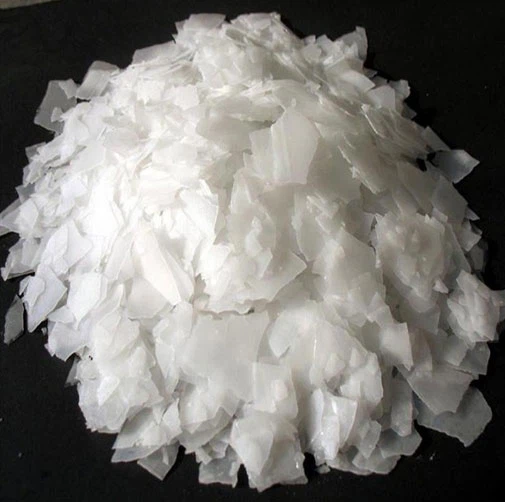
A "molecular messenger" that simultaneously soothes nerves and smooths fine lines: Acetyl Dipeptide-1 Cetyl Ester-redefining the philosophy of comfortable anti-aging for sensitive skin.

In this era of precision-focused functional skincare, a widely overlooked yet profound truth is being repeatedly validated by the scientific community: the stinging, redness, and tightness experienced by sensitive skin are, at their core, a "signaling storm" ignited by the interplay between nerve endings and immune cells. External stressors-such as UV exposure, chemical exfoliation, aesthetic procedures, pollution, or even temperature fluctuations-trigger skin nerve endings to release Substance P and CGRP (calcitonin gene-related peptide). This activates TRPV1 ion channels, leading to the subjective sensations of redness, burning, and stinging.
Traditional soothing ingredients often act merely to "extinguish the fire" downstream, failing to address the issue at the source-the nerve signaling itself.
Acetyl Dipeptide-1 Cetyl Ester-a lipophilic small molecule composed of an N-acetylated dipeptide (tyrosine and arginine) modified with a cetyl ester (sequence: Ac-Tyr-Arg-O-hexadecyl ester; CAS 196604-48-5; molecular weight: 603.84)-offers a scientific solution to this dilemma. Its precursor is Kyotorphin, an endogenous analgesic dipeptide first discovered in the brains of animals in 1979. Through sophisticated molecular engineering, scientists have transformed this natural "messenger of comfort" into a key capable of acting directly upon the skin's neuro-immune axis. It is now recognized as one of the most promising biomimetic lipopeptides at the intersection of sensitive skin care and anti-aging [1][2].
I. The Origins of the Molecule: From Kyotorphin to a "Neural Mute Button"
The design of Acetyl Dipeptide-1 Cetyl Ester embodies a dual-layered ingenuity. N-terminal acetylation enhances both stability and skin affinity, while the introduction of a C16 cetyl ester at the C-terminus imparts lipophilicity. This significantly improves transdermal absorption efficiency, allowing the molecule to effectively penetrate the stratum corneum and reach nerve endings and mast cells in the superficial dermis [2]. This lipopeptide structure grants a small-molecule dipeptide-which would otherwise have limited water solubility-a truly "highly efficient delivery capability."
II. Core Mechanism I: Neuromodulation-Intercepting Stinging Signals at the Source
The primary value of Acetyl Dipeptide-1 Cetyl Ester lies in its neuromodulatory properties. Technical literature indicates that it facilitates the transmission of "comfort signals" through two complementary neural pathways [2][3]:
Inhibiting the release of Substance P: This reduces the "pain signals" transmitted from cutaneous nerve endings to the central nervous system, thereby curbing excessive skin reactions-such as stinging, burning, and swelling-at their source.
Stimulating the release of Met-enkephalin: It promotes the synthesis and release of Met-enkephalin-an endogenous opioid peptide-within skin cells. By activating δ-opioid receptors, this peptide produces natural sedative and analgesic effects, providing the skin with an immediate sense of "comfort."
Simultaneously, this lipopeptide enhances the expression of the POMC (pro-opiomelanocortin) gene, which increases levels of β-endorphin and reduces the release of CGRP. This, in turn, suppresses the activation of TRPV1 ion channels-the "master switch" for burning sensations and neurogenic inflammation [3]. When TRPV1 is silenced, the skin's response threshold to thermal, chemical, and mechanical stimuli is effectively raised.
III. Core Mechanism II: Anti-inflammatory Cascade-Extinguishing the NF-κB Pathway
The overactivation of neural signals is invariably accompanied by the release of inflammatory mediators. Acetyl Dipeptide-1 Cetyl Ester demonstrates exceptional anti-inflammatory capabilities in this context: it significantly reduces the expression of pro-inflammatory factors such as IL-1, IL-6, and TNF-α, and downregulates PGE2-a mediator closely linked to neurogenic inflammation in sensitive skin. In doing so, it inhibits the NFκB signaling pathway, which serves as the central regulatory hub for skin inflammatory responses【2】【3】.
This means that beyond merely "calming the nerves," it establishes an anti-inflammatory barrier for sensitive skin at the immunological level. It offers synergistic benefits for managing issues such as redness associated with rosacea, inflammatory acne, and irritation following aesthetic procedures.
IV. Core Mechanism III: Barrier Reinforcement-Upregulating Three Key Markers
Long-term management of sensitive skin requires the physical reconstruction of the skin barrier. Research indicates that Acetyl Dipeptide-1 Cetyl Ester can significantly upregulate the gene expression of three key markers associated with skin barrier function【3】:
AQP3 (Aquaporin-3): Enhances the efficiency of water transport between the dermis and epidermis, boosting skin hydration.
Filaggrin: Promotes the synthesis of Natural Moisturizing Factors (NMF), strengthening the water-retention barrier of the stratum corneum.
Caspase-14: Participates in the terminal differentiation of the stratum corneum, maintaining the structural integrity of the cornified envelope.
Working in synergy, these components not only soothe the skin but also foster genuine "resilience from within," helping to reduce the recurrence of sensitivity.
V. Core Mechanism IV: Smoothing Fine Lines-An "Anti-Aging Bonus" of Lipopeptides
Remarkably, Acetyl Dipeptide-1 Cetyl Ester is more than just a "soothing peptide." It activates fibroblasts, promoting the synthesis of elastin and pro-elastin-in vitro studies have shown an increase in elastin fiber synthesis of up to 90% compared to the control group【2】. Furthermore, its neuromodulatory properties induce a "muscle-relaxing" effect, which helps alleviate micro-contractions of facial expression muscles, thereby preventing the formation of dynamic wrinkles at their source. This dual-action profile-combining soothing and firming properties-serves as the core essence of "comfort-focused anti-aging" formulations.
VI. Clinical Evidence: Capsaicin-Induced Stinging Test in 31 Volunteers with Sensitive Skin
Clinical evidence for Acetyl Dipeptide-1 Cetyl Ester comes from a controlled study published in the *Journal of the European Academy of Dermatology and Venereology*. Marini et al. conducted a single-blind, randomized, split-face trial involving 31 female volunteers (aged 19–65) who self-identified as having sensitive to highly sensitive skin. The nasolabial fold area was stimulated with a 40 ppm capsaicin cream, and the intensity of the burning sensation was evaluated at various time points [1].
The results demonstrated that a formulation containing Acetyl Dipeptide-1 Cetyl Ester provided significant anti-stinging/anti-burning effects at 1, 2, 5, 10, and 15 minutes post-capsaicin application, delivering a measurable, immediate soothing response for individuals with sensitive skin [1]. This trial is particularly significant because the capsaicin-induced stinging test is a widely recognized, objective evaluation model in sensitive skin research, lending high clinical credibility to the findings.
VII. Efficacy Dimensions: Comprehensive Coverage from Immediate Relief to Long-Term Anti-Aging
Based on the aforementioned multi-faceted mechanisms, Acetyl Dipeptide-1 Cetyl Ester offers four key benefits in skincare applications:
1. Immediate Soothing: "Emergency Calming" within 15 Minutes
It can rapidly calm nerve endings in response to sudden stinging, burning, or redness-such as that caused by chemical exfoliation ("acid peels"), sun exposure, or aesthetic medical procedures-making it an ideal active ingredient for emergency soothing serums and post-procedure recovery products [1][3].
2. Long-Term Stabilization: Restoring a "Low-Reactivity" Skin State
By continuously downregulating the NFκB pathway and inhibiting TRPV1 activation, it raises the skin's threshold for reacting to daily environmental stressors. This significantly reduces the frequency of sensitivity flare-ups, making it well-suited for gentle, long-term skin stabilization. 3. Barrier Repair: End-to-End Reinforcement from AQP3 to Filaggrin
Enhances hydration, moisture retention, and the integrity of the stratum corneum simultaneously. By reducing Transepidermal Water Loss (TEWL), it shifts the skin from a "fragile, sensitized" state back to a "resilient, stable" one [3].
4. Synergistic Anti-Aging: Smoothing Fine Lines and Boosting Elasticity
Promotes elastin synthesis, attenuates micro-contractions of facial muscles, and mitigates inflammation-induced collagen degradation. This triple-action mechanism seamlessly integrates "soothing" and "anti-aging" benefits within a single molecule [2].
VIII. Safety Philosophy: A Scientific Synthesis of Gentleness and Efficacy
The safety of Acetyl Dipeptide-1 Cetyl Ester is anchored by three pillars: a biomimetic origin (derived from the endogenous human dipeptide, Kyotorphin); a non-destructive mechanism of action (relying on signal modulation rather than cellular inhibition); and clinically verified tolerability (demonstrating excellent compatibility even with sensitive skin). With a recommended usage concentration of 0.05–0.1% and an optimal formulation pH of 5.0–6.5, it is highly compatible with a wide range of active ingredients-including ceramides, panthenol, niacinamide, Vitamin C derivatives, and various peptide complexes-making it a foundational element for developing "sensitive-skin-friendly" high-performance formulas [2].
Conclusion: Returning Skincare to Its Essence of Comfort
Truly exceptional skincare is not about the aggressive application of harsh, potent agents; rather, it lies in a precise understanding of the skin's neuro-immune signaling. By leveraging the biomimetic wisdom of Kyotorphin, Acetyl Dipeptide-1 Cetyl Ester acts as a "silencer" across multiple pathways-including Substance P, TRPV1, and NFκB-ensuring that every skincare application becomes a comfortable, harmonious dialogue with the skin. Choosing Acetyl Dipeptide-1 Cetyl Ester means opting for a rational approach to skincare-one rooted in neuroscience, barrier biology, and clinical evidence. It allows sensations of tightness, stinging, and redness to quietly dissipate through precise molecular signaling, while fostering the restoration of elasticity, firmness, and radiance through gentle, nurturing care.
References:
Marini, A., et al. (2016). "Comparison of skin calming effects of cosmetic products containing 4-t-butylcyclohexanol or acetyl dipeptide-1 cetyl ester on capsaicin-induced facial stinging in volunteers with sensitive skin." *Journal of the European Academy of Dermatology and Venereology*, 30(1), 18-24. (A core clinical study-a single-blind, randomized, split-face trial involving 31 volunteers with sensitive skin-demonstrating that a formulation containing acetyl dipeptide-1 cetyl ester provides significant relief from stinging and burning sensations within 15 minutes.)【1】
Avena Lab. (2024). "Acetyl Dipeptide-1 Cetyl Ester - Technical Data Sheet: Sequence Ac-Tyr-Arg-O-hexadecyl ester, CAS 196604-48-5, MW 603.84." Product Technical Description. (A technical document for the raw material, detailing the multi-faceted mechanism of action of acetyl dipeptide-1 cetyl ester: inhibiting Substance P, stimulating the release of methionine-enkephalin, downregulating IL-1/IL-6/TNF-α, and promoting the synthesis of elastin and pro-elastin-with an increase of up to 90%. It also provides recommended usage concentrations and formulation parameters.)【2】
Congen Pharma. (2025). "Acetyl Dipeptide-1 Cetyl Ester: A Dual-Action Anti-Aging and Soothing Agent." Technical Article. (A technical article discussing how this lipopeptide functions through a neuroregulatory pathway-promoting POMC gene expression, which increases β-endorphin, reduces CGRP, and decreases TRPV1 activation. It also covers mechanisms for strengthening the skin barrier and reducing inflammation, including the upregulation of key barrier markers (AQP3, Filaggrin, and Caspase 14) and the downregulation of PGE2 and the NFκB pathway; the text cites clinical data from 31 volunteers with sensitive skin.)【3】
Ferro, M. S., et al. (2021). "Usage of "Synthetic Peptides in Cosmetics for Sensitive Skin." *Pharmaceuticals*, 14(8), 811. (A key review article that systematically examines the mechanisms of action, clinical evidence, and formulation applications of soothing peptides-such as Acetyl Dipeptide-1 Cetyl Ester-in the care of sensitive skin, providing a scientific basis for its classification as a neuromodulatory soothing peptide.)
Schagen, S. K. (2017). "Topical Peptide Treatments with Effective Anti-Aging Results." *Cosmetics*, 4(2), 16. (A review article that provides a comprehensive summary of the diverse mechanisms of peptides in anti-aging, including the classification and functions of signal peptides, neurotransmitter-inhibiting peptides, and carrier peptides; this offers a taxonomic foundation for the dual "soothing + anti-aging" efficacy of Acetyl Dipeptide-1 Cetyl Ester.)
Sederma / Croda Beauty Actives. (2024). "Calmosensine™ - N-Acetyl-Tyrosyl-Arginyl-Hexadecyl Ester." Product Technical Description. (A technical document from the raw material supplier, confirming Calmosensine™ as the commercial source of Acetyl Dipeptide-1 Cetyl Ester and defining its role in skincare as a "messenger for comfort and muscle relaxation.")【4】
1:Where to buy bulk Acetyl Dipeptide-1 Cetyl Ester+CAS No.196604-48-5 ?
Send an inquiry email to us : sales@gihichem.com
Our professional team will reply to you within 6 hours.
2:What will you get from gihi chemicals except higher quality products?
Gihi Chemicals Co.,Limited, is a professional manufacturer with
3strong research and development lab centers + 4 standardized production workshops,with ISO9001 & FDA certificate & CE certificates.
Except the high quality product, your team will get the following 4 support:
1): Factory direct sales, China's lower price, free sample is available.
2): COA, TDS, SDS and other testing spectrum are available at any time.
3):ISO9001, FDA, CE certificate, 3 labs and 4 factories, to insure the higher quality.
4): Large quantity in stock, prompt delivery from warehouse, 24h professional service.
3:Why Choose gihi chemicals for Your trustful supplier?
●Extensive Selection: Our 3 labs and 4 factories ensure every year, we could produce more than 100 new chemical structures every year.
●GMP-Compliant Facilities: Our 4 professional factories comply with strict GMP (Good Manufacturing Practice) guidelines, ensuring the highest quality and safety standards throughout production.
●Rigorous Certifications: All ingredients are certified with HACCP, ISO, FDA,CE certificates.
●Competitive Wholesale Prices: Enjoy cost-effective pricing without compromising on quality.
●Customizable Solutions: OEM and ODM services are available. Tailor your ingredient blends to your specific needs and target clients.
●Expert Technical Support: Our expert team is here to answer your questions and guide you through the selection process.
●Quicker Delivery: We ensure smooth and timely delivery to your desired destination anywhere.