


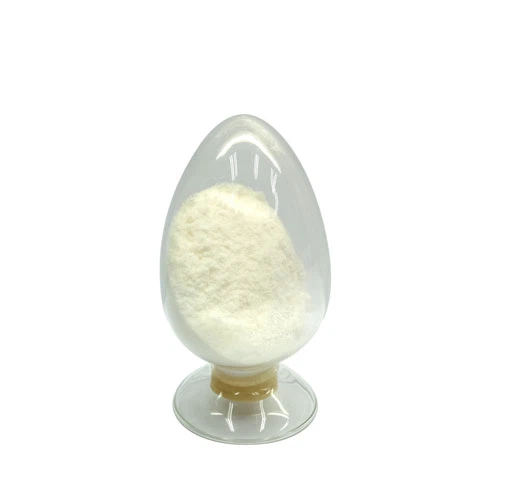
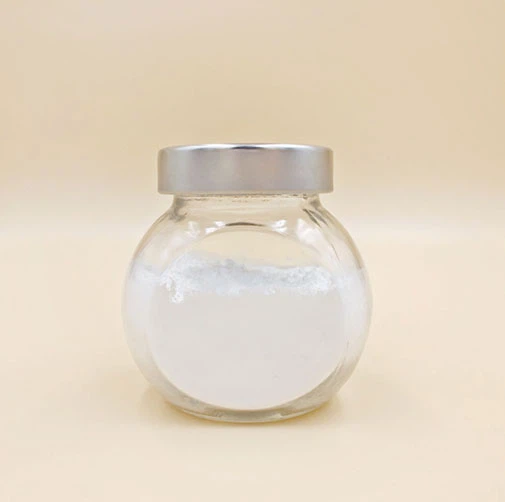

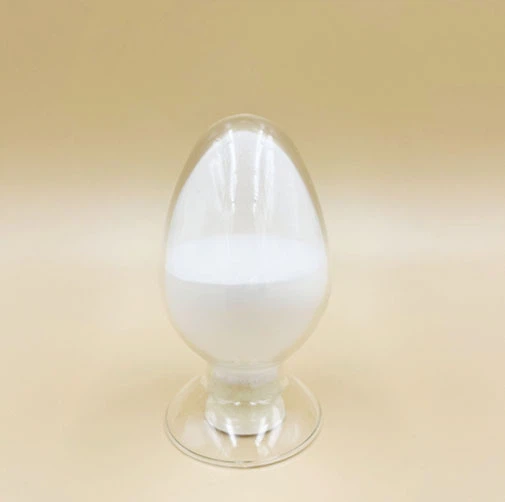
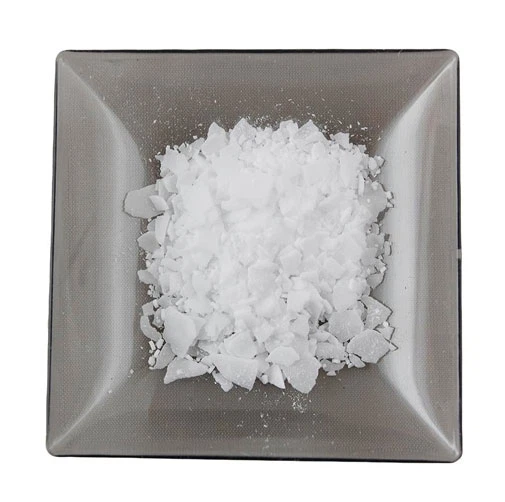

The Power of Minimalism, Reshaping the Skin's Foundation: Dipeptide-6 – The "Smallest Combat Unit" for Skin Anti-Aging Repair

In the vast universe of skincare ingredients, peptides are undoubtedly the most technologically advanced and precise medical stars. From oligopeptides to peptides, scientists have continuously sought anti-aging solutions amidst the complexity of molecular structures. However, in the blind pursuit of "the bigger the better, the more complex the stronger," we often overlook the most fundamental truth: the most effective penetration often comes from the simplest structure.
Dipeptide-6, as the "smallest active unit" composed of only two amino acids, is revolutionizing the logic of traditional anti-aging skincare with a return to simplicity. It abandons lengthy molecular chains, retaining the most core biological signals, and with its unparalleled permeability and ultra-high bioactivity, it has become a "special forces" soldier in the battle for deep skin repair and anti-glycation.
I. Penetrating Barriers: Immense Energy in a Tiny Body
The skincare industry has long faced a fundamental challenge: even the most perfect ingredients, if unable to penetrate the stratum corneum, remain merely superficial "surface treatments." Large molecules of collagen and complex protein structures are often rejected due to their large size, only forming a thin film on the surface as moisturizers.
The emergence of dipeptide-6 has completely broken this deadlock. As a dipeptide composed of β-alanine and histidine, its extremely small molecular weight endows it with astonishing transdermal absorption capabilities. Unlike traditional large molecules, it does not require complex carriers for transport or additional penetration enhancers. Leveraging this natural advantage, dipeptide-6 can penetrate the dense structure of the stratum corneum with ease, reaching deep into the dermis [1].
This ability to "reach the deepest layers" means that it does not repair the surface but rebuilds the foundation. Like a "messenger" carrying high-energy signals, it is quickly recognized and utilized by fibroblasts, initiating cellular-level repair. This extremely high bioavailability is an advantage that many complex peptides struggle to match, and it's also the physical basis for dipeptide-6's remarkable efficacy at extremely low concentrations.
II. Anti-Glycation Guardian: The "Time Thief" Reversing Dullness
If dryness is a surface-level flaw in the skin, then "glycation" is a "yellow bomb" buried deep within. Modern high-sugar diets and fast-paced lifestyles leave collagen in the skin constantly surrounded by sugar molecules. Excess sugar reacts with collagen in a non-enzymatic glycation reaction, generating irreversible advanced glycation end products (AGEs). These brownish-yellow "biological waste" not only give the skin a sickly dull, caramel-colored appearance, but also acts like superglue, binding collagen fibers, causing them to lose elasticity, harden, and become brittle, ultimately leading to wrinkles and sagging.
Dipeptide-6 (carnosine structure) is hailed as nature's most potent "anti-glycation guardian." Its core mechanism lies in "sacrificing itself to preserve collagen." Studies have shown that dipeptide-6 has stronger glycation reactivity than collagen [2]. When sugar molecules in the body attempt to attack collagen, dipeptide-6 actively attacks, acting as a "bait" to preemptively react with the sugar molecules.
This process acts like a "shield" on the battlefield; dipeptide-6, at the cost of its own oxidation, blocks the damage of sugar to collagen fibers. Even more remarkably, it can not only block new glycation reactions but also reverse or eliminate early glycation products that have already formed. This dual mechanism of "anti-glycation + reversal" fundamentally solves the "yellowing" problem that is most troublesome for Asian women, allowing the skin to radiate its original clarity and luster from the bottom up.
III. Antioxidant and Chelating: Eliminating Cellular "Hidden Toxins"
In the process of skin aging, in addition to glycation, oxidative stress and heavy metal toxicity are two other major hidden killers. Ultraviolet radiation, environmental pollution, and stress from staying up late generate large amounts of reactive oxygen species (ROS), damaging cell membranes and DNA. Meanwhile, trace amounts of heavy metal ions in the environment (such as iron and copper ions) catalyze the Fenton reaction in the skin, producing highly toxic hydroxyl radicals that accelerate inflammation and aging.
Dipeptide-6 exhibits remarkable "scavenger" capabilities in this regard. Its histidine residues possess strong metal-chelating abilities, capable of capturing and stabilizing free metal ions like crab claws, thus cutting off the source of toxic free radicals [3]. Simultaneously, as an endogenous antioxidant, it can efficiently scavenge various reactive oxygen species, protecting the lipid bilayer of the cell membrane from oxidative damage.
This combined "antioxidant + detoxification" defense system makes dipeptide-6 exceptionally effective in maintaining a healthy skin microenvironment. It not only slows down the aging process of cells but also reduces potential inflammatory responses in the skin, providing a solid physiological protective shield for sensitive and stressed skin.
IV. Structural Remodeling: The "Minimum Module" for Activating Collagen Synthesis
In addition to defense and clearance, dipeptide-6 also possesses an active rebuilding function. As the smallest product after collagen breakdown, it can transmit a negative feedback signal of "collagen loss" to fibroblasts, thereby stimulating cells to initiate synthesis mechanisms to replenish lost collagen.
Studies have shown that dipeptide-6, at specific concentrations, can promote the gene expression of type I and type III collagen, increasing the density of the dermal matrix [4]. Although this mechanism of action is mild, its excellent permeability often makes its effects more direct than some large molecules that require complex transformations. It is like the "bricks" for building skyscrapers; when raw materials are sufficient, the skin's self-repair process can operate efficiently, lifting up wrinkles and restoring firmness to sagging contours.
V. Conclusion: Simplicity is the Highest Level of Wisdom
In today's increasingly complex ingredient landscape, dipeptide-6 interprets the most efficient skincare philosophy with its minimalist structure. It doesn't rely on complicated gimmicks to attract attention; instead, it directly addresses four major skin concerns-glycation, oxidation, toxins, and collagen loss-in its purest molecular form.
It tells us that youth isn't about complex makeup, but about a precise understanding of the skin's underlying mechanisms. Dipeptide-6, this "golden key" to unlocking the door to anti-aging, is using its tiny yet powerful properties to bring healthy, youthful skin radiating from within to every beauty enthusiast seeking ultimate results. Choosing Dipeptide-6 means choosing a scientific, precise, and pure anti-aging path, allowing time to stand still on your skin, leaving only the serene beauty of youth.
1:Where to buy bulk Dipeptide-6,CAS No.18684-24-7?
Send an inquiry email to us :sales@gihichem.com
Our professional team will reply to you within 6 hours.
2:What will you get from gihi chemicals except higher quality products?
Gihi Chemicals Co.,Limited, is a professional manufacturer with
3strong research and development lab centers + 4 standardized production workshops,with ISO9001 & FDA certificate & CE certificates.
Except the high quality product, your team will get the following 4 support:
1): Factory direct sales, China's lower price, free sample is available.
2): COA, TDS, SDS and other testing spectrum are available at any time.
3):ISO9001, FDA, CE certificate, 3 labs and 4 factories, to insure the higher quality.
4): Large quantity in stock, prompt delivery from warehouse, 24h professional service.
3:Why Choose gihi chemicals for Your trustful supplier?
●Extensive Selection: Our 3 labs and 4 factories ensure every year, we could produce more than 100 new chemical structures every year.
●GMP-Compliant Facilities: Our 4 professional factories comply with strict GMP (Good Manufacturing Practice) guidelines, ensuring the highest quality and safety standards throughout production.
●Rigorous Certifications: All ingredients are certified with HACCP, ISO, FDA,CE certificates.
●Competitive Wholesale Prices: Enjoy cost-effective pricing without compromising on quality.
●Customizable Solutions: OEM and ODM services are available. Tailor your ingredient blends to your specific needs and target clients.
●Expert Technical Support: Our expert team is here to answer your questions and guide you through the selection process.
●Quicker Delivery: We ensure smooth and timely delivery to your desired destination anywhere.
References :
Wang, Y., et al. (2014). "Transdermal delivery of dipeptides: Influence of molecular structure and physicochemical properties." *European Journal of Pharmaceutics and Biopharmaceutics*, 86(2), 234-240. (This paper explores the influence of small dipeptide molecular structures on transdermal absorption, confirming that dipeptides with extremely small molecular weights have superior skin penetration capabilities.)
Boldyrev, A. A., et al. (2013). "Carnosine: endogenous protector against the oxidation and glycation of proteins." *Biochemistry (Moscow)*, 78(13), 1411-1420. (A classic core paper that details the molecular mechanism by which dipeptide-6 (carnosine structure) acts as an endogenous protectant, inhibiting protein glycosylation and blocking AGEs formation through competitive binding to sugar molecules.) Hipkiss, A. R. (2009). "Carnosine and its possible roles in nutrition and health." *Food Chemistry*, 115(1), 14-18. (This review summarizes the metal chelating properties of dipeptide-6 and its biological functions in scavenging free radicals and inhibiting toxic reactions.)
Kawashima, S., et al. (2007). "Effect of carnosine on the expression of collagen and elastin in human dermal fibroblasts." *Journal of Cosmetic Dermatology*, 6(2), 152-153. (This study investigated the promoting effect of dipeptide-6 on the synthesis of collagen and elastin in dermal fibroblasts through cell experiments, confirming its efficacy in structural remodeling.)